.webp)
ADHESIVES ETP CASE STUDY
How a Malaysian Adhesives ETP Overcame Formaldehyde Toxicity & Achieved 90% COD Reduction
Industry: Chemical & Adhesives Manufacturing (Premier Adhesives Producer in Malaysia)
Plant Capacity: 168 KLD ETP | 2-Stage UASB & 2-Stage Aerobic
Primary Solution: Dual-Stage Bio-Augmentation (BactaServe Anaerobic & Aerobic)
41% → 66%
Active Biomass Growth
90.66%
Aerobic COD Removal
93.99%
Aerobic BOD Reduction
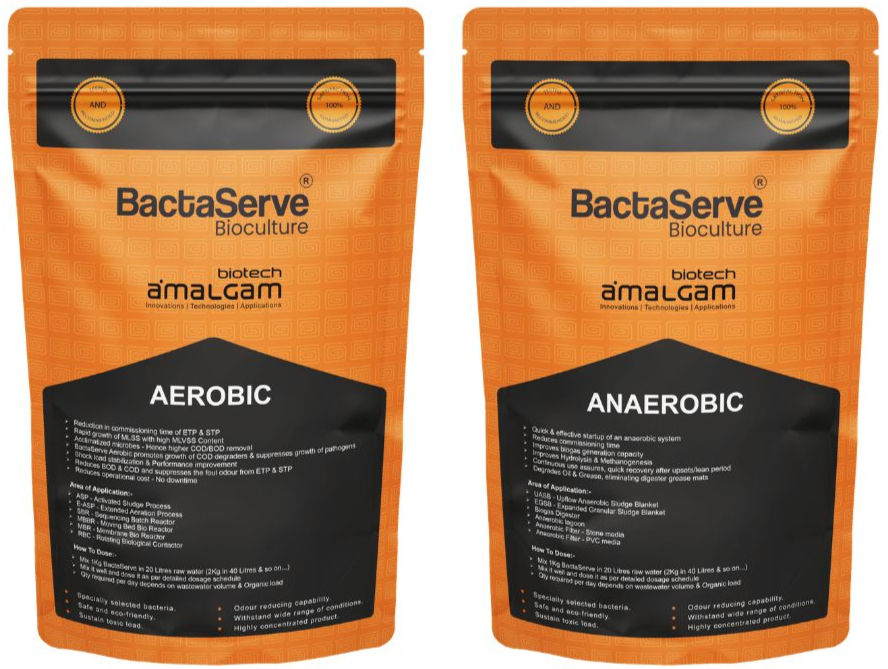
A 168 KLD adhesives manufacturing ETP in Malaysia improved COD, BOD and MLVSS performance using BactaServe Aerobic and Anaerobic. Active MLVSS increased from 41% to 66%, while aerobic COD removal reached 90.66% and BOD removal reached 93.99%, improving biological treatment performance.
Background & Technical Challenge
Plant Overview
A major adhesives manufacturer in Malaysia operates a 168 KLD ETP to treat high-strength wastewater generated from chemical and adhesive production. The effluent contains complex organic compounds that contribute significantly to COD and BOD, including formaldehyde, aldehydes and ketone-based compounds that are difficult to degrade biologically.
The treatment system combines chemical pretreatment, DAF, formaldehyde treatment, two-stage UASB anaerobic treatment and two-stage aerobic treatment, followed by secondary clarification and PSF/ACF filtration. The anaerobic system consists of two 50 m³ UASB tanks, while the two aerobic tanks provide a combined 1,100 m³ biological treatment volume.
Despite the multi-stage treatment configuration and high retention times, biological treatment performance remained poor before bioaugmentation. The facility required improved COD and BOD reduction together with stronger active biomass development in the aerobic treatment stage.
The Technical Challenge & Risk
Formaldehyde Toxicity: Adhesives wastewater contained high concentrations of formaldehyde and other difficult-to-degrade chemicals, creating toxic conditions for conventional biological cultures and limiting biological treatment performance.
Low Active Biomass: Total MLSS remained relatively high at 2,630 to 2,980 ppm, but active MLVSS represented only 39 to 44%, indicating a low proportion of active biological mass available for organic degradation.
Poor COD Reduction: Even with two-stage anaerobic and two-stage aerobic treatment, baseline COD removal remained inadequate. Anaerobic COD reduction was only 21.32 to 36.72%, while aerobic COD reduction remained around 41.61 to 44.25%.
Poor BOD Reduction: Baseline aerobic BOD removal was only 43.67 to 46.34%, indicating insufficient biological activity for effective degradation of biodegradable organic compounds.
Complex Organic Load: Formaldehyde conversion generated reducing sugars containing aldehyde and ketone-based compounds, adding further complexity to the organic load entering the biological treatment stages.
Biological Treatment Risk: The combination of toxic compounds, low active MLVSS and poor COD/BOD degradation created a risk of continued unstable biological performance despite the plant having substantial anaerobic and aerobic treatment capacity.
Treatment Process Flow Diagram

The 168 KLD adhesives ETP uses a multi-stage treatment process combining chemical pretreatment, formaldehyde treatment, two-stage anaerobic digestion, two-stage aerobic treatment and tertiary filtration.
Process Flow
Raw Influent → Storage Tank → pH Adjustment & Coagulation → DAF 1 → Flocculation → pH Adjustment → Formaldehyde Treatment → DAF 2 → Buffer Tank → UASB 1 → UASB 2 → Aerobic Tank 1 → Aerobic Tank 2 → Secondary Clarifier → Treated Water Tank → PSF & ACF → Final Discharge
Process Overview
Chemical Pretreatment: pH adjustment, coagulation, flocculation and DAF remove suspended and chemically treatable contaminants before biological treatment.
Formaldehyde Treatment: The reaction stage provides dedicated treatment for formaldehyde present in the adhesives wastewater.
Anaerobic Treatment: Two 50 m³ UASB reactors provide sequential anaerobic treatment to break down high-strength organic compounds and reduce the incoming COD/BOD load.
Aerobic Treatment: Two 550 m³ aerobic tanks provide biological polishing, where BactaServe Aerobic supports active biomass development and degradation of remaining organic pollutants.
Secondary Clarification: Separates biological solids from the treated wastewater, with biological sludge recirculated to maintain the aerobic biomass.
Tertiary Filtration: PSF and ACF provide final polishing before the treated effluent reaches the final discharge.
Bio-Augmentation Strategy & Dosing
Why BactaServe™ Aerobic & Anaerobic Were Selected
To improve biological treatment performance in formaldehyde-rich adhesives wastewater, Amalgam Biotech implemented a dual-stage bio-augmentation strategy using BactaServe Anaerobic and BactaServe Aerobic. The solution was selected to strengthen biological activity, increase active MLVSS and improve COD and BOD reduction across the existing UASB and aerobic treatment stages.
Unlike conventional biological seeding, the two products were applied to their respective treatment stages. BactaServe Anaerobic was dosed into the two UASB reactors, while BactaServe Aerobic was dosed into the two aerobic tanks. A higher initial dosage was used during the first stages of treatment, followed by a gradual reduction to maintenance dosing as the biological system stabilised.
Key Benefits
Increased active MLVSS in the aerobic treatment system
Improved biological COD and BOD reduction
Supported treatment of formaldehyde-rich wastewater
Improved anaerobic COD degradation
Improved aerobic COD and BOD polishing
Strengthened biological activity across UASB and aerobic stages
Reduced bioculture requirement after system stabilisation
Supported efficient long-term ETP operation with maintenance dosing
Dual-Stage Biological Treatment Strategy
BactaServe Anaerobic and BactaServe Aerobic were applied at different biological treatment stages to address the high-strength organic load and low active biomass observed in the ETP. The dosing programme began with higher bacterial concentrations and gradually tapered as the biological system developed and stabilised.
1. Anaerobic Bio-Augmentation
BactaServe Anaerobic was dosed into the two UASB reactors to improve anaerobic degradation of complex organic compounds.
2. Aerobic Bio-Augmentation
BactaServe Aerobic was dosed into the two aerobic tanks to build active MLVSS and improve organic degradation.
3. Active Biomass Development
Increased the active MLVSS fraction from 41% to 63 to 66% following bioaugmentation.
4. COD/BOD Reduction
Improved biological treatment, achieving up to 90.66% aerobic COD removal and 93.99% aerobic BOD removal.
Dosing Protocol (60-Day Campaign)
Timeline Sequence | BactaServe Aerobic Dosage | BactaServe Anaerobic Dosage | Operational Strategy |
Days 1 – 10 (High Loading) | 4.0 kg/day (40 kg total) | 2.0 kg/day (20 kg total) | Rapid shock-load acclimation |
Days 11 – 20 | 3.0 kg/day (30 kg total) | 1.0 kg/day (10 kg total) | Bio-colony expansion |
Days 21 – 30 | 2.0 kg/day (20 kg total) | 0.5 kg/day (5 kg total) | System stabilization |
Days 31 – 60 (Maintenance) | 1.0 kg/day (30 kg total) | 0.5 kg/day (15 kg total) | Low-cost steady maintenance |
Total Product Dosed | 120 kg Aerobic Culture | 50 kg Anaerobic Culture | Trouble-Free Operation |
*Dosing schedule is based on this plant case study and may vary depending on plant operating conditions and site-specific factors.
Performance Results & Analytics
Key Metrics Achieved
66% Active MLVSS: Active biological biomass increased from a baseline of 39 to 44% to 63 to 66%, indicating substantial improvement in the active biomass fraction.
66.28% Anaerobic COD Removal: COD removal across the two-stage UASB system increased from 21.32 to 36.72% to 64.55 to 66.28% after BactaServe Anaerobic application.
90.66% Aerobic COD Removal: Aerobic-stage COD removal improved from 41.61 to 44.25% to 87.52 to 90.66%, with COD reaching 510 mg/L on the reported sampling date.
93.99% Aerobic BOD Removal: Aerobic BOD removal increased from 43.67 to 46.34% to 88.50 to 93.99%, reducing BOD to 179 mg/L on the reported sampling date.
75.50% Anaerobic BOD Removal: BOD removal across the anaerobic stage increased from 21.19 to 28.76% to 67.74 to 75.50% following BactaServe Anaerobic application.
Baseline MLSS & MLVSS Before Bio-Culture
Test Date | Total MLSS (ppm) | Active MLVSS (ppm) | Active Biomass Fraction (% MLVSS) | Biological State |
17-Feb | 2,840 ppm | 1,221 ppm | 43% | Severely Inhibited |
18-Feb | 2,665 ppm | 1,093 ppm | 41% | High Inert Fraction |
21-Feb | 2,920 ppm | 1,139 ppm | 39% | Critical Toxicity |
23-Feb | 2,630 ppm | 1,131 ppm | 43% | Low Degradation Rate |
25-Feb | 2,980 ppm | 1,311 ppm | 44% | Baseline Threshold |
MLSS & MLVSS Growth Post-Bioculture
Date | Total MLSS (ppm) | Active MLVSS (ppm) | Active Biomass Fraction (% MLVSS) | Performance Impact |
01-May | 4,450 ppm | 2,937 ppm | 66% | Active Biological Recovery |
08-May | 4,520 ppm | 2,848 ppm | 63% | High Toxic Resistance |
15-May | 4,360 ppm | 2,834 ppm | 65% | Dense Floc Formation |
22-May | 4,400 ppm | 2,904 ppm | 66% | Robust Organic Removal |
29-May | 4,625 ppm | 2,960 ppm | 64% | Steady-State Operating Level |
COD Reduction Across Anaerobic Digester
Sampling Date | Influent COD (mg/L) | Before Outlet (mg/L) | After Outlet (mg/L) | Before Efficiency (%) |
30 Apr | 15,600 | 12,274 | 5,330 | 21.32 |
02 May | 13,760 | 10,001 | 4,640 | 27.32 |
03 May | 15,400 | 9,745 | 5,460 | 36.72 |

COD Reduction Across Aeration Tank
Sampling Date | Inlet Aeration COD (mg/L) | Before Outlet (mg/L) | After Outlet (mg/L) | Before Removal (%) |
30 Apr | 5,330 | 3,112 | 665 | 41.61 |
02 May | 4,640 | 2,656 | 503 | 42.76 |
03 May | 5,460 | 3,044 | 510 | 44.25 |

BOD Reduction Across Anaerobic Digester
Sampling Date | Influent BOD (mg/L) | Before Outlet (mg/L) | After Outlet (mg/L) | Before Efficiency (%) |
30 Apr | 6,120 | 4,823 | 1,974 | 21.19 |
02 May | 9,120 | 6,932 | 2,234 | 23.99 |
03 May | 11,400 | 8,121 | 2,980 | 28.76 |

BOD Reduction Across Anaerobic Digester
Sampling Date | Inlet Aeration BOD (mg/L) | Before Outlet (mg/L) | After Outlet (mg/L) | Before Removal (%) |
30 Apr | 1,974 | 1,112 | 227 | 43.67 |
02 May | 2,234 | 1,223 | 168 | 45.26 |
03 May | 2,980 | 1,599 | 179 | 46.34 |


The 168 KLD ETP combines two-stage UASB treatment with two-stage aerobic treatment for high-COD and BOD adhesives wastewater.
Client Feedback: Improved COD & BOD Reduction with Biological Stabilisation
“Our adhesives manufacturing ETP was struggling with high COD and BOD due to complex chemicals, including formaldehyde, while active biomass development remained low despite two-stage anaerobic and aerobic treatment. After implementing BactaServe Aerobic and BactaServe Anaerobic, biological performance improved significantly. COD and BOD removal increased across both treatment stages, while active MLVSS improved from around 41% to 63 to 66%.”
ETP Operations Team
Adhesives Manufacturing Facility, Malaysia
⭐⭐⭐⭐⭐
Facing Formaldehyde Toxicity or Low MLVSS Issues at Your Chemical Plant?
Let our chemical wastewater specialists analyze your influent VOCs, UASB retention times, and aeration MLVSS ratios to design a custom BactaServe bio-augmentation strategy.
Step 1: Share your process details and treatment objectives.
Step 2: Our engineers assess your system and operating conditions.
Step 3: Receive a tailored solution and implementation plan.
Frequently Asked Questions
Q1: How did BactaServe overcome formaldehyde toxicity to achieve over 90% COD removal in an adhesives ETP?
BactaServe Anaerobic and Aerobic introduced specialised bacterial strains resistant to formaldehyde, aldehydes, and ketone-based solvents. Dosed across a 168 KLD Malaysian adhesives plant's 2-stage UASB and 2-stage aeration tanks, it increased active MLVSS to 66% and improved aerobic COD removal from 44% to 90.66%.
Performance Highlights:
Target Waste Stream: High-strength adhesives manufacturing effluent containing formaldehyde, reducing sugars, and volatile solvents.
Anaerobic Upgrade: Increased 2-stage UASB COD removal efficiency from 21.32% to 66.28%.
Aerobic Polishing: Reduced final aeration tank COD to 503 to 665 mg/L and BOD to 168 to 227 mg/L, achieving 93.99% BOD reduction.
Q2: Why does formaldehyde inhibit standard biological seed sludges in industrial ETPs?
Formaldehyde is a strong antimicrobial agent that can cross-link proteins, damage cell membranes, and disrupt metabolic enzymes in standard mesophilic bacteria. Unadapted seed sludge can experience cell damage, low active MLVSS levels, and poor COD/BOD removal when exposed to formaldehyde spikes.
Engineering Comparison:
Standard Cow Dung / Municipal Sludge: Highly sensitive to formaldehyde spikes, which can cause biological instability and increased inert solids.
BactaServe Dual Consortium: Uses acclimated bacterial strains with enzymes that help oxidise formaldehyde and reducing sugars into compounds that can be used for microbial growth.
Q3: How did dual-stage bio-augmentation increase the active biomass (MLVSS) fraction from 41% to 66%?
Before treatment, total MLSS was approximately 2,800 ppm, but active MLVSS represented only 41% because of inert chemical solids and dead sludge. BactaServe Aerobic increased active bacterial flocs, raising total MLSS to 4,625 ppm with 2,960 ppm MLVSS, representing a 66% active fraction.
Biomass Transformation Summary:
Baseline (18-Feb): Total MLSS: 2,665 ppm | Active MLVSS: 1,093 ppm (41%) → Low biological degradation capacity.
Post-Bioculture (29-May): Total MLSS: 4,625 ppm | Active MLVSS: 2,960 ppm (64 to 66%) → Improved biological resilience and treatment capacity.
Q4: What was the 60-day dual-stage dosing protocol for the 168 KLD adhesives manufacturing ETP?
The 60-day programme used 120 kg of BactaServe Aerobic and 50 kg of BactaServe Anaerobic. Initial dosing was 4.0 kg/day Aerobic and 2.0 kg/day Anaerobic during Days 1 to 10, gradually reducing to 1.0 kg/day Aerobic and 0.5 kg/day Anaerobic for maintenance.
Dosing Schedule Breakdown:
Days 1 to 10 (Acclimation): 4.0 kg/day Aerobic + 2.0 kg/day Anaerobic, with 60 kg total dosing to build formaldehyde shock tolerance.
Days 11 to 20 (Expansion): 3.0 kg/day Aerobic + 1.0 kg/day Anaerobic, with 40 kg total dosing.
Days 21 to 30 (Stabilisation): 2.0 kg/day Aerobic + 0.5 kg/day Anaerobic, with 25 kg total dosing.
Days 31 to 60 (Maintenance): 1.0 kg/day Aerobic + 0.5 kg/day Anaerobic, with 45 kg total dosing to support long-term biological stability.
Q5: What process flow diagram configuration was used to treat this Malaysian chemical effluent?
The 168 KLD ETP routes raw wastewater through Storage, Coagulation, DAF 1, Formaldehyde Treatment, DAF 2, Buffer Tank, 2-Stage UASB (2 × 50 m³), 2-Stage Aerobic (2 × 550 m³), Secondary Clarifier, and tertiary PSF/ACF filters before final discharge.
Multi-Stage Synergies:
DAF Pre-treatment: Removes free resins and insoluble chemical floatables before biological treatment.
UASB Anaerobic Stage: Removes a large portion of the organic COD load before aerobic polishing, helping reduce downstream oxygen demand and blower power requirements.
Q6: How does improving both anaerobic and aerobic treatment stages benefit chemical manufacturing plant OPEX?
Improving COD removal in the upstream UASB stage reduces the oxygen demand and blower electricity required in downstream aeration basins. Building resilient biological biomass can also reduce dependence on chemical treatment, improve sludge quality, and help prevent costly treatment failures and compliance issues.
Operational Impact:
Lower Energy Bills: Lower organic loading after the UASB stage reduces the aeration requirement and associated blower energy consumption.
Higher Sludge Quality: Dense biological flocs improve secondary clarifier settling and help prevent solids carryover into tertiary Sand and Carbon filters.

Written by Ashutosh Vadanagekar
Technical Director, Amalgam Biotech
Ashutosh Vadanagekar has over 22 years of experience in water and wastewater treatment, with expertise in process design and bioculture technology. He develops and implements eco-friendly biological treatment solutions for ETPs and STPs across industries, addressing challenges such as high COD and BOD, ammonia, FOG, odour and biological process instability. He also contributes technical expertise and practical insights to Amalgam Biotech’s wastewater treatment case studies. Connect on LinkedIn