.webp)
ANDRITZ Sludge Dewatering Equipment Supplier in India
ANDRITZ sludge dewatering equipment is designed to deliver efficient solid-liquid separation for for industrial and municipal wastewater treatment plants. As an authorised ANDRITZ partner, Amalgam Biotech supplies Filter Press, Belt Press, and Screw Press systems with technical support and application assistance across India.

ANDRITZ Sludge Dewatering Equipment Range
ANDRITZ Filter Press Systems
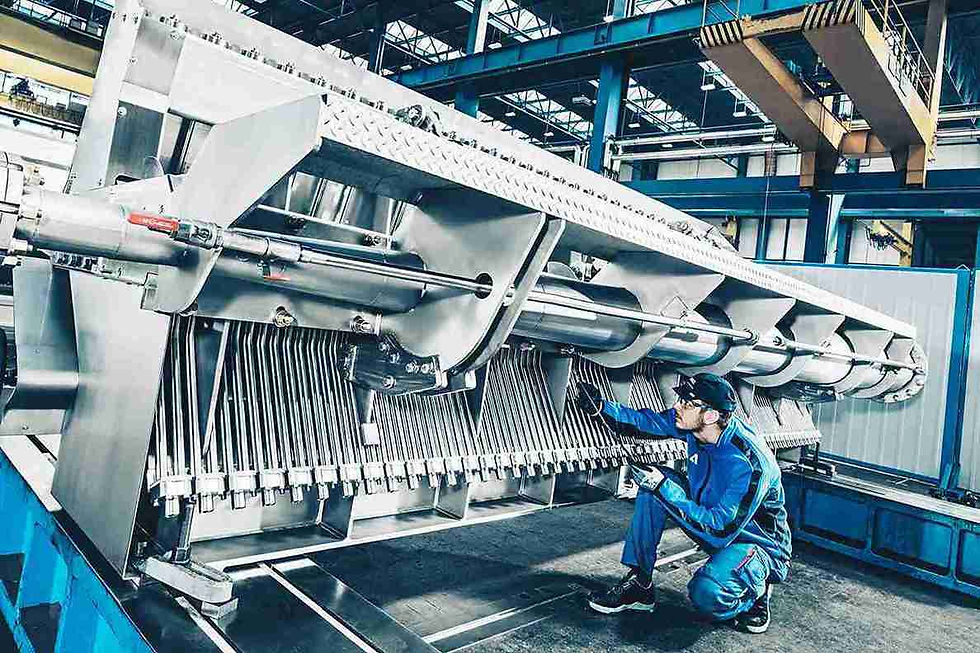
ANDRITZ filter press systems are designed for demanding industrial applications that require effective liquid-solid separation and significant reduction of hazardous or costly waste volumes. These systems operate using a high-pressure batch filtration process. Slurry is pumped through recessed or membrane plates and filter cloths, where solids are retained inside the chambers while clean filtrate passes through and is collected.
Performance Target
Produces some of the highest cake dryness levels in the industry, typically between 30% and 45% Dry Solids (% DS), depending on the characteristics of the sludge.
Flocculation & Conditioning Requirement
Best suited for inorganic, chemical, and mineral slurries. Sludge is usually conditioned using lime, ferric chloride, or carefully controlled polymer dosing to form strong flocs that can withstand high pressure without blocking the filter cloth.
Key Engineering Features
-
Heavy-duty sidebar or overhead beam construction
-
Fully automated plate shifting system
-
Core blow system to remove remaining liquid before cake discharge
Target Industrial Use Cases
-
Pharmaceutical ETPs: Separation of complex organic chemical precipitates and biological secondary sludge
-
Chemical Manufacturing: Treatment of corrosive, hazardous, or crystalline wastewater where liquid recovery is important
-
Textile Processing: Dewatering dense dye-house sludge containing high levels of chemical coagulants
-
Mining & Metallurgy: Tailings management and mineral concentrate recovery
ANDRITZ Belt Press Systems
ANDRITZ belt press systems are designed for continuous, large-scale wastewater treatment operations. Conditioned sludge passes between two moving porous belts and through a series of rollers. As pressure gradually increases, water is removed from the sludge, providing continuous dewatering without the downtime associated with batch systems.
Performance Target
Provides continuous high-capacity operation and typically produces a cake with 18% to 25% Dry Solids (% DS).
Flocculation & Conditioning Requirement
Performance depends heavily on proper polymer preparation and dosing. The sludge must be conditioned with high-molecular-weight cationic polymers to create large, strong flocs that release water efficiently in the gravity drainage section.
Key Engineering Features
-
Extended gravity drainage zone for rapid water removal
-
Wedge zone for smooth pressure application
-
Automatic high-pressure belt washing system to prevent mesh blockage
Target Industrial Use Cases
-
Municipal STPs: Continuous dewatering of primary sludge and waste activated sludge (WAS)
-
Pulp and Paper Industries: Handling large volumes of fibrous organic sludge
-
Food & Beverage Plants: Continuous dewatering of biological sludge from anaerobic and aerobic treatment systems

ANDRITZ Sludge Screw Press SCS
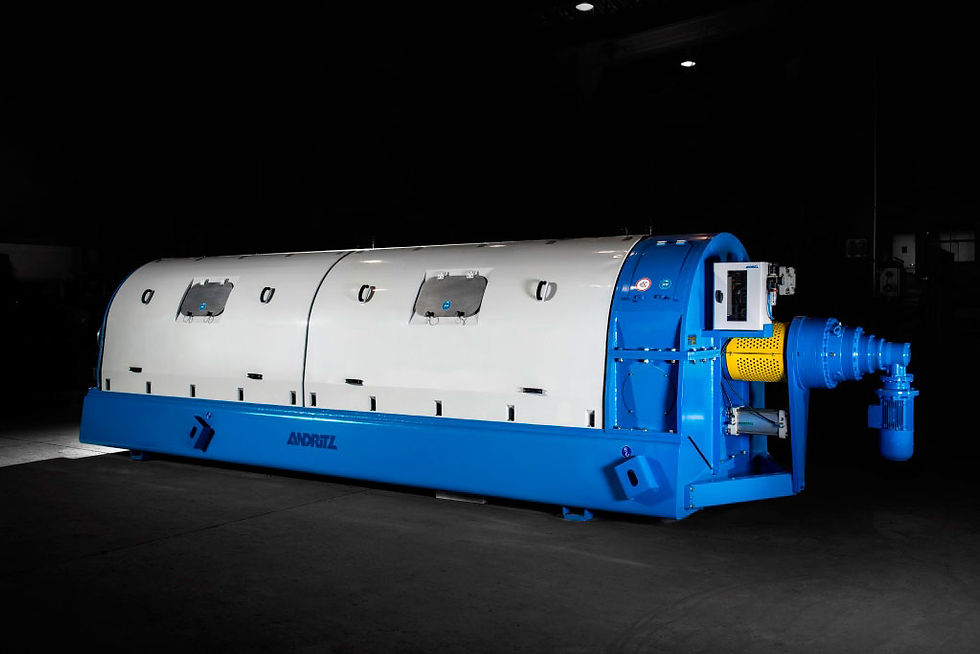
The ANDRITZ Screw Press SCS is a slow-speed sludge dewatering system designed for facilities that require low maintenance, low energy consumption, and a compact installation footprint. The system uses a tapered screw inside a cylindrical filter screen. As the screw rotates, increasing pressure gradually squeezes water out of the sludge.
Performance Target
Provides effective volume reduction and typically produces a cake with 15% to 22% Dry Solids (% DS) while operating at very low speeds, usually below 5 RPM.
Flocculation & Conditioning Requirement
The system includes an integrated flocculation tank with a variable-speed mixer. This allows operators to adjust polymer dosing in real time and achieve proper floc formation before the sludge enters the screw press.
Key Engineering Features
-
Low-torque, energy-efficient drive motors
-
Up to 70% lower power consumption compared to decanter centrifuges
-
Self-cleaning system with intermittent spray bars
-
Reduced wash-water consumption
Target Industrial Use Cases
-
Small to Medium ETPs and STPs: Suitable for facilities with limited space or strict noise and vibration requirements
-
Dairies and Agro-Processing Plants: Effective for oily, greasy, and sticky biological sludge containing fats and proteins
-
Textile and Pharmaceutical Manufacturing: Reliable daily dewatering of secondary biological sludge with minimal operator intervention
Technical Performance Comparison
Why Sludge Dewatering is Important for Wastewater Treatment Plants
Wastewater treatment generates large amounts of sludge containing a high percentage of water. If this sludge is not properly dewatered, it becomes expensive to store, transport, and dispose of. Sludge dewatering helps reduce these costs and improves overall plant efficiency.
Reduces Sludge Volume
Dewatering removes a large amount of water trapped within the sludge, significantly reducing its volume. This creates a drier, more manageable sludge cake that is easier to handle and store.
Lowers Transportation Costs
Transporting wet sludge means paying to move water rather than solids. Higher cake dryness reduces the overall weight and volume of sludge, leading to fewer truckloads and lower transportation costs.
Improves Environmental Safety
Effective dewatering helps trap heavy metals and chemical precipitates within the sludge cake. This reduces the risk of contaminants leaking during storage, handling, or transportation.
Increases Efficiency of Further Treatment
Drier sludge performs better in downstream processes such as solar drying, composting, incineration, or landfill disposal. Reduced moisture content helps speed up these processes and lowers overall treatment costs.
How Sludge Dewatering Works: A Step-by-Step Process
Effective sludge dewatering requires a combination of proper chemical conditioning and mechanical separation. The process helps convert high-moisture sludge into a concentrated, easy-to-handle solid cake.
1. Sludge Characterisation and Testing
The process begins with analysing the incoming sludge to understand its properties. Key parameters such as Total Suspended Solids (TSS), pH, particle charge, and the proportion of organic and inorganic solids are measured. This information helps determine the most suitable dewatering approach.
2. Chemical Conditioning and Flocculation
The sludge is then conditioned using carefully controlled doses of cationic or anionic polymers. These polymers help small suspended particles combine into larger, stronger flocs. This improves water release and prepares the sludge for efficient mechanical dewatering.
3. Mechanical Dewatering Separation
The conditioned sludge is fed into the selected ANDRITZ dewatering equipment. Depending on the application, dewatering is carried out using a Filter Press, Belt Press, or Screw Press. These systems remove water through gravity drainage, mechanical compression, or hydraulic pressure.
4. Filtrate Recycling & Cake Discharge
After dewatering, the concentrated sludge cake is discharged into storage containers for handling or disposal. At the same time, the separated filtrate is collected and returned to the treatment process, helping improve water recovery and overall plant efficiency.
Result: The final output is a drier sludge cake with reduced volume, lower disposal costs, and easier handling, while the recovered filtrate can be reused within the wastewater treatment system.
Integration with Wastewater Treatment Systems
A sludge dewatering system is most effective when it works as part of the overall treatment process. ANDRITZ separation systems can be easily integrated into both existing and newly designed wastewater treatment plants.
Compatible with Biological Treatment Processes
Integrates smoothly with Activated Sludge Processes (ASP), Moving Bed Biofilm Reactors (MBBR), and Sequential Batch Reactors (SBR).
Works with Sludge Thickening Systems
Works effectively with gravity belt thickeners and rotary drum thickeners to increase solids concentration before dewatering.
Coordinating Plant Additions
Can be combined with specialised microbial products such as BactaServe, automated polymer preparation systems, and industrial odour control solutions to create a more efficient treatment plant.
Why Choose Amalgam Biotech as Your ANDRITZ Partner?
As an authorised ANDRITZ partner, Amalgam Biotech provides access to world-class sludge dewatering technology backed by local technical expertise and support across India.
Verified Technical Expertise
As an authorised partner, we provide genuine equipment, original components, factory-approved engineering specifications, and access to official technical resources.
Application-Specific Sizing Guidance
We do not rely on standard sizing charts. Our team evaluates your plant's chemical and biological characteristics to recommend the most suitable equipment size.
End-to-End Commissioning Support
We work closely with your operations team, providing installation guidance, operational optimisation, and start-up support.
Complete Lifecycle Reliability
From initial laboratory testing to routine wear-part inspections, we provide ongoing support to help maximise uptime and maintain reliable system performance.
Supplying ANDRITZ Dewatering Equipment Across India
We provide technical support, application assistance, and equipment supply across major industrial hubs and municipal regions throughout India, including:
-
West & North: Mumbai, Pune, Ahmedabad, Surat, Vadodara, Nashik, Nagpur, Indore, Delhi NCR.
-
South & East: Hyderabad, Chennai, Bengaluru, Visakhapatnam, Coimbatore, Kolkata.
Looking for ANDRITZ Sludge Dewatering Solutions in India?
Whether you need a Filter Press, Belt Press, or Screw Press, our team can help evaluate your requirements and recommend the most suitable ANDRITZ solution for your wastewater treatment application.
We provide equipment selection, technical consultation, application assessment, process optimisation, and pan-India support for industrial and municipal wastewater treatment facilities. Contact Amalgam Biotech today to discuss your sludge dewatering requirements.
Frequently Asked Questions
Q1: How do I choose between an ANDRITZ Filter Press, Belt Press, and Screw Press SCS?
Choose an ANDRITZ Filter Press for maximum cake dryness (30 to 45% DS) on inorganic or hazardous sludge. Choose a Belt Press for high-capacity, continuous dewatering (18 to 25% DS) of primary and secondary sludge. Choose a Screw Press SCS for low power consumption, minimal maintenance, and oily biological sludge (15 to 22% DS).
-
Selection Breakdown:
-
Filter Press: Best for batch processing, high Dry Solids (% DS) targets, chemical ETPs, and high-pressure filtration.
-
Belt Press: Best for continuous, large-scale municipal STPs and fibrous pulp and paper applications.
-
Screw Press SCS: Best for compact installation, low noise and vibration, and low energy consumption with operation below 5 RPM.
-
Q2: What cake dryness (% DS) can be achieved with ANDRITZ sludge dewatering equipment?
ANDRITZ Filter Presses produce the highest cake dryness at 30% to 45% Dry Solids (% DS). ANDRITZ Belt Presses achieve 18% to 25% DS, while the slow-speed ANDRITZ Screw Press SCS delivers 15% to 22% DS. Specialised paper sludge models can achieve up to 65% DS using steam heating.
-
Operational Impact: Higher cake dryness significantly reduces sludge weight and volume, resulting in fewer truckloads, lower transport costs, and reduced landfill or incineration expenses.
Q3: Why does the ANDRITZ Sludge Screw Press SCS consume up to 70% less power than decanter centrifuges?
The ANDRITZ Screw Press SCS operates at very slow speeds, typically below 5 RPM, using low-torque, energy-efficient drive motors. Instead of relying on high-speed centrifugal force, it uses a tapered screw inside a cylindrical screen basket to gradually squeeze water from the sludge using very little electrical power.
-
Key Advantages:
-
Energy Savings: Reduces electricity consumption by up to 70% compared with decanter centrifuges.
-
Wear & Maintenance: Low operating speeds reduce wear on internal parts and minimise vibration.
-
Integrated Flocculation: Includes a built-in flocculation tank with a variable-speed mixer for real-time polymer optimisation.
-
Q4: What chemical conditioning and polymers are required for ANDRITZ dewatering equipment?
Belt Presses and Screw Presses require high-molecular-weight cationic polymers to form strong flocs that release water during gravity drainage and compression. Filter Presses handle inorganic or chemical sludge conditioned with lime, ferric chloride, or specific polymer formulations for high-pressure filtration.
-
Optimisation Tip: Amalgam Biotech combines ANDRITZ dewatering equipment with customised BactaServe bio-treatments and automated polymer preparation systems to optimise chemical dosing and help prevent filter cloth or screen blinding.
Q5: Can ANDRITZ sludge dewatering equipment be retrofitted into existing WWTP or ETP facilities in India?
Yes, ANDRITZ dewatering systems are designed for easy integration into both existing and new wastewater treatment plants. The compact, enclosed design of the Screw Press SCS and the low-profile Belt Press allow installation in limited spaces with minimal civil modifications.
-
Turnkey Support: As an authorised partner in India, Amalgam Biotech provides complete support, including sludge characterisation testing (TSS, organic ratio), application sizing, installation guidance, and commissioning.
Q6: How does sludge dewatering lower overall operating costs and improve environmental safety?
Direct Answer:
Mechanical dewatering removes free and interstitial water, converting liquid sludge into a dry, concentrated cake. This reduces sludge volume and transport costs, locks heavy metals and contaminants inside the solid cake to help prevent leakage, and returns clean filtrate to the treatment process.
-
Process Integration: The recovered filtrate is recycled back to the plant headworks, while the drier sludge cake improves the efficiency of downstream solar drying, composting, or incineration systems.