.webp)
AGRO-PROCESSING ETP CASE STUDY
How a 200 MT/day Potato Starch Plant Achieved ETP Odour Control
Industry: Agro-Processing / Potato Starch Manufacturing
Location: Southwest Region, Punjab, India | Capacity: 200 MT/day Starch (300 KLD ETP)
Primary Solution: 3-Zone Automated High-Pressure OdoServe Misting System
3 Zones
Targeted Odor Misting Network
100% Organic
Crop-Safe Plant Derived Formula
Zero Complaints
Restored Air Quality for Surrounding Farms

A 200 MT/day potato starch plant in Southwest Punjab experienced severe ETP odours caused by high-TSS wastewater creating anaerobic zones and releasing ammonia (NH₃), hydrogen sulphide (H₂S), mercaptans, aldehydes, ketones and organic acids. Amalgam Biotech implemented OdoServe odour control with a high-pressure misting system across three ETP zones, then optimised the misting cycles over four days to reduce odour while minimising water, chemical and pump energy consumption.
Background & Technical Challenge
Plant Overview
A potato starch manufacturing facility in Southwest Punjab, India, produces approximately 200 MT of potato-based starch per day using potatoes cultivated in selected regions of India. The manufacturing process generates high-TSS wastewater containing suspended organic solids derived from potatoes.
The facility operates a 300 KLD effluent treatment plant (ETP) consisting of two equalisation tanks, Flash Mixers 1 and 2, a flocculator, tube settler, multi-grade filter and activated carbon filter. The treatment scheme is physicochemical and does not include aerobic or anaerobic biological treatment.
High TSS and settled organic matter created anaerobic zones within the treatment tanks, resulting in foul odours from ammonia (NH₃), hydrogen sulphide (H₂S), aldehydes, ketones, organic acids and mercaptans. To address these emissions, OdoServe was applied through a high-pressure misting system across three ETP zones.
The Technical Challenge & Risk
High-TSS Wastewater: Potato starch production generated wastewater with high concentrations of suspended organic solids. Additional powdered chemicals used during physicochemical treatment also increased TSS within the effluent.
Anaerobic Zone Formation: Under high organic loading, oxygen depletion caused settled biodegradable solids to create anaerobic zones inside the ETP tanks, becoming a major source of foul odour generation.
Multiple Odorous Gases: Anaerobic degradation produced ammonia (NH₃), hydrogen sulphide (H₂S), mercaptans, aldehydes, ketones and organic acids, resulting in offensive odours around the treatment facility.
Worker & Agricultural Exposure: The odours affected factory personnel as well as farmers working on agricultural land surrounding the facility, creating unsanitary conditions and potential exposure concerns.
Multiple ETP Odour Hotspots: Odour emissions occurred across several treatment units, including the equalisation tanks, flash mixers, flocculator, tube settler, sludge holding tanks and MEE feed tanks, requiring odour control across three separate treatment zones rather than at a single source.
Treatment Process Flow Diagram

Treatment process flow diagram of the 300 KLD potato starch ETP showing the physicochemical treatment process, three-zone high-pressure misting system, and OdoServe odour control application.
Process units mapped based on actual plant flow:
Equalisation Tank 1 & 2 → Flash Mixer Tank 1 → Flash Mixer Tank 2 → Flocculator → Tube Settler → Multi-Grade Filter → Activated Carbon Filter → Outlet
OdoServe High-Pressure Misting: Zone 1 (Equalisation Tanks) → Zone 2 (Flash Mixers, Flocculator & Tube Settler) → Zone 3 (Sludge Holding Tanks & MEE Feed Tanks).
Process Overview
Equalisation: Two equalisation tanks balance incoming high-TSS potato processing wastewater before chemical treatment.
Physicochemical Treatment: Flash Mixers 1 and 2 provide chemical dosing, followed by flocculation and tube settling to separate suspended solids.
Tertiary Filtration: Clarified water passes through the multi-grade filter and activated carbon filter for final polishing before discharge.
Three-Zone Odour Control: OdoServe is applied through a high-pressure misting system across the equalisation tanks, flash mixers, flocculator, tube settler, sludge holding tanks and MEE feed tanks to neutralise foul odours at their source.
Optimised Misting Cycles: The misting system operates using optimised ON/OFF cycles developed through a four-day field evaluation to reduce odour while minimising water, electricity and chemical consumption.
OdoServe Odour Control Strategy
Why OdoServe™ Industrial Odour Control Solution Was Selected
To control foul odours generated by high-TSS potato processing wastewater, Amalgam Biotech implemented OdoServe Odour Control through a high-pressure misting system across three ETP zones. The solution was selected to neutralise offensive gases released from anaerobic zones within the physicochemical treatment plant, where settled organic solids generated ammonia (NH₃), hydrogen sulphide (H₂S), mercaptans, aldehydes, ketones and organic acids.
Unlike conventional masking agents, OdoServe uses an organic, plant-derived formulation that neutralises odorous compounds on contact. The system was further optimised through a four-day field evaluation to determine the ideal misting ON/OFF cycles, reducing odour while minimising water, electricity and chemical consumption.
Key Benefits
Neutralised ammonia, hydrogen sulphide and other offensive odours at the source
Controlled aldehydes, ketones, mercaptans and organic acid emissions
Organic formulation safe for workers, crops and the surrounding ecosystem
Installed across three critical ETP odour-control zones
Optimised misting cycles reduced water, electricity and chemical consumption
Uniform odour control using a high-pressure SS header misting system
Suitable for non-biological physicochemical wastewater treatment plants
3-Zone Odour Control Strategy
The OdoServe high-pressure misting system was engineered to provide continuous odour control across the major off-gassing areas of the 300 KLD potato starch ETP. Following a four-day optimisation study, individual misting cycles were established for each treatment zone.
Zone 1: Equalisation Tanks
Controls odours released from Equalisation Tanks 1 and 2.
Zone 2: Reaction & Settling
Treats Flash Mixers 1 & 2, the flocculator and tube settler.
Zone 3: Sludge & MEE Tanks
Controls odours from sludge holding tanks and MEE feed tanks.
Optimised Misting
Operates using optimised ON/OFF cycles to minimise water, power and chemical consumption while maintaining effective odour control.
Misting Cycle Optimization Matrix
To minimize water, power, and chemical consumption, Amalgam Biotech conducted a 4-day trial to optimize automated ON/OFF misting timers for each zone:
ETP Treatment Zone | Targeted Process Equipment | Optimized Misting ON-Time | Optimized Misting OFF-Time | Engineering Rationale |
Zone 1 & Zone 2 | Equalization Tanks 1 & 2, Flash Mixers 1 & 2, Flocculator, Tube Settler | 10 Minutes | 35 Minutes | Sustained mist barrier over large open liquid surface areas. |
Zone 3 | Sludge Holding Tanks 1 & 2, MEE Feed Tanks 1 & 2 | 3 Minutes | 5 Minutes | Short, frequent bursts to catch rapid off-gassing from concentrated sludge. |
*Values shown are project-specific and may vary depending on facility requirements and operating conditions.
Performance Results & Analytics
Key Metrics Achieved
Three-Zone Odour Control: OdoServe was deployed through a high-pressure misting system across three critical ETP zones, providing targeted odour control at equalisation tanks, reaction units, sludge holding tanks and MEE feed tanks.
Optimised Misting Cycles: A four-day field optimisation established ideal misting ON/OFF cycles of 10/35 minutes for the equalisation and reaction zones and 3/5 minutes for sludge holding and MEE feed tanks, reducing water, electricity and chemical consumption.
Organic Odour Neutralisation: OdoServe neutralised ammonia (NH₃), hydrogen sulphide (H₂S), aldehydes, ketones, organic acids and mercaptans using an organic formulation that is safe for workers, crops and the surrounding ecosystem.
Resource-Efficient Operation: The optimised misting strategy improved odour control while minimising pump operating time, water usage and chemical consumption, making the solution suitable for continuous industrial operation.
Physicochemical ETP Integration: The high-pressure misting system was successfully integrated into the 300 KLD non-biological physicochemical ETP without affecting the existing wastewater treatment process.
Operational Restoration
Operational Parameter | Pre-Treatment Baseline | Post-Misting Performance |
Ambient Toxic Odors | High NH₃, H₂S & Organics | Completely Neutralized |
Farm & Worker Safety | Unsanitary / Health Risk | Clean, Safe Air Quality |
System Power & Chemical Draw | Unoptimized Continuous | Energy-Efficient Timer Cycles |
Human & Crop Eco-Safety | Chemical Risk Exposure | 100% Plant-Derived Organic |


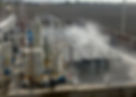

A 200 MT/day potato starch manufacturing facility where OdoServe and a high-pressure misting system controlled odours generated from high-TSS wastewater treatment.
Client Feedback: High COD Reduction & Biological Process Stabilisation
"Our starch manufacturing ETP was struggling with high COD and unstable biological treatment due to fluctuations in wastewater load. After introducing BactaServe Aerobic, the biomass recovered quickly, COD removal improved significantly and the treatment process became stable. We achieved consistent discharge compliance without any plant downtime or major process changes."
Plant Head – ETP Operations
Starch Manufacturing Facility, India
⭐⭐⭐⭐⭐
Facing Toxic Ammonia or Sludge Odor Issues at Your Processing Site?
Let our bio-engineers analyze your plant layout and design a custom 3-zone OdoServe high-pressure misting system.
Step 1: Share your process details and treatment objectives.
Step 2: Our engineers assess your system and operating conditions.
Step 3: Receive a tailored solution and implementation plan.
Frequently Asked Questions
Q1: How did OdoServe odour control achieve complete ETP odour control in a 200 MT/day potato starch plant?
OdoServe odour control was applied through an automated 3-zone high-pressure stainless steel misting system across a 300 KLD physicochemical ETP in Punjab. Its 100% organic, plant-derived formulation neutralised ammonia (NH₃), hydrogen sulfide (H₂S), mercaptans, and organic acids at the liquid-air interface.
Performance Highlights:
Target Waste Stream: High-TSS potato starch wastewater that created anaerobic sludge zones in non-biological ETP tanks.
Zero Community Complaints: Restored ambient air quality for nearby agricultural areas and plant personnel.
Eco-Safe Formula: A 100% plant-derived formulation that is safe for agricultural crops, soil, and workers.
Q2: Why does potato starch wastewater generate severe anaerobic odours in physicochemical ETPs?
High levels of Total Suspended Solids (TSS) from potato starch processing and chemical coagulants settle at the bottom of non-aerated equalisation and sludge tanks. Without oxygen, these settled solids become anaerobic and generate NH₃, H₂S, aldehydes, ketones, and Volatile Fatty Acids.
Process Flow Mapping (300 KLD ETP):
Equalisation Tanks 1 & 2: High TSS settling creates anaerobic sludge at the bottom of the tanks.
Reaction Units: Flash Mixers 1 & 2, the Flocculator, and the Tube Settler generate chemical-organic sludge.
Sludge & MEE Holding: Concentrated sludge releases organosulphur compounds and amine vapours.
Q3: How were the 3 misting zones configured across the 300 KLD potato starch ETP?
Zone 1 covered Equalisation Tanks 1 & 2. Zone 2 treated Flash Mixers 1 & 2, the Flocculator, and the Tube Settler. Zone 3 covered Sludge Holding Tanks 1 & 2 and MEE Feed Tanks 1 & 2 using high-pressure SS misting headers.
Targeted Misting Layout:
Zone 1 & 2 (Equalisation & Settling): High-pressure SS misting lines covered large tank surfaces to capture rising odour gases.
Zone 3 (Sludge & MEE Tanks): Dedicated misting lines controlled concentrated odour emissions during sludge transfer and MEE feeding.
Q4: How were the automated misting timer cycles optimised during the 4-day field evaluation?
To reduce water, power, and chemical use, Zones 1 & 2 operated on a 10-minute ON / 35-minute OFF cycle to maintain continuous surface coverage. Zone 3 used a 3-minute ON / 5-minute OFF cycle to control frequent odour releases from sludge handling areas.
Optimisation Matrix:
Zone 1 & 2 (Equalisation & Settling): 10 minutes ON / 35 minutes OFF, maintaining an atomised mist barrier above open tanks.
Zone 3 (Sludge & MEE Tanks): 3 minutes ON / 5 minutes OFF, providing frequent misting during periods of high odour release.
Resource Savings: Reduced electricity, water, and chemical consumption compared with continuous misting.
Q5: Why is OdoServe odour preferred over chemical masking agents or synthetic deodorisers near agricultural land?
Chemical masking agents temporarily cover unpleasant odours with synthetic fragrances but do not remove the gases causing them. OdoServe odour control uses a 100% organic, plant-derived formulation that neutralises odour molecules on contact while remaining safe for nearby farmland, crops, and workers.
Safety & Compliance Comparison:
Synthetic Masking Agents: Only mask odours, may leave non-biodegradable residues, and can increase the risk of crop contamination.
OdoServe odour control: Neutralises NH₃ and H₂S on contact, is 100% plant-derived, and is non-toxic to soil, crops, and plant personnel.
Q6: Can high-pressure OdoServe misting systems be integrated into non-biological ETPs?
Yes, OdoServe high-pressure misting systems can be installed directly above open equalisation tanks, flash mixers, clarifiers, and sludge pits without requiring tank covers, ducted air extraction, or changes to the existing physicochemical treatment process.
Turnkey Support: Amalgam Biotech provides complete support across India, including site assessment, SS header fabrication, high-pressure pump sizing, automated PLC timer configuration, installation guidance, and ongoing chemical supply.

Written by Ashutosh Vadanagekar
Technical Director, Amalgam Biotech
Ashutosh Vadanagekar has over 22 years of experience in water and wastewater treatment, with expertise in process design and bioculture technology. He develops and implements eco-friendly biological treatment solutions for ETPs and STPs across industries, addressing challenges such as high COD and BOD, ammonia, FOG, odour and biological process instability. He also contributes technical expertise and practical insights to Amalgam Biotech’s wastewater treatment case studies. Connect on LinkedIn