.webp)
PULP & PAPER MILL ETP CASE STUDY
How a 2,400 KLD Paper Mill ETP Achieved 95% COD Removal & MLSS Development at 42°C
Industry: Paper Manufacturing / Recycling Kraft Paper Process
Location: Central Region, India | Scale: 2,400 KLD
Primary Solution: BactaServe - Pulp and Paper Specialised Bioculture
42°C Thermal
Resilient Bio-Degradation
95% COD
Removal (13,000 → 700 mg/L)
516 → 3,000 ppm
Active MLSS Growth in 30 Days
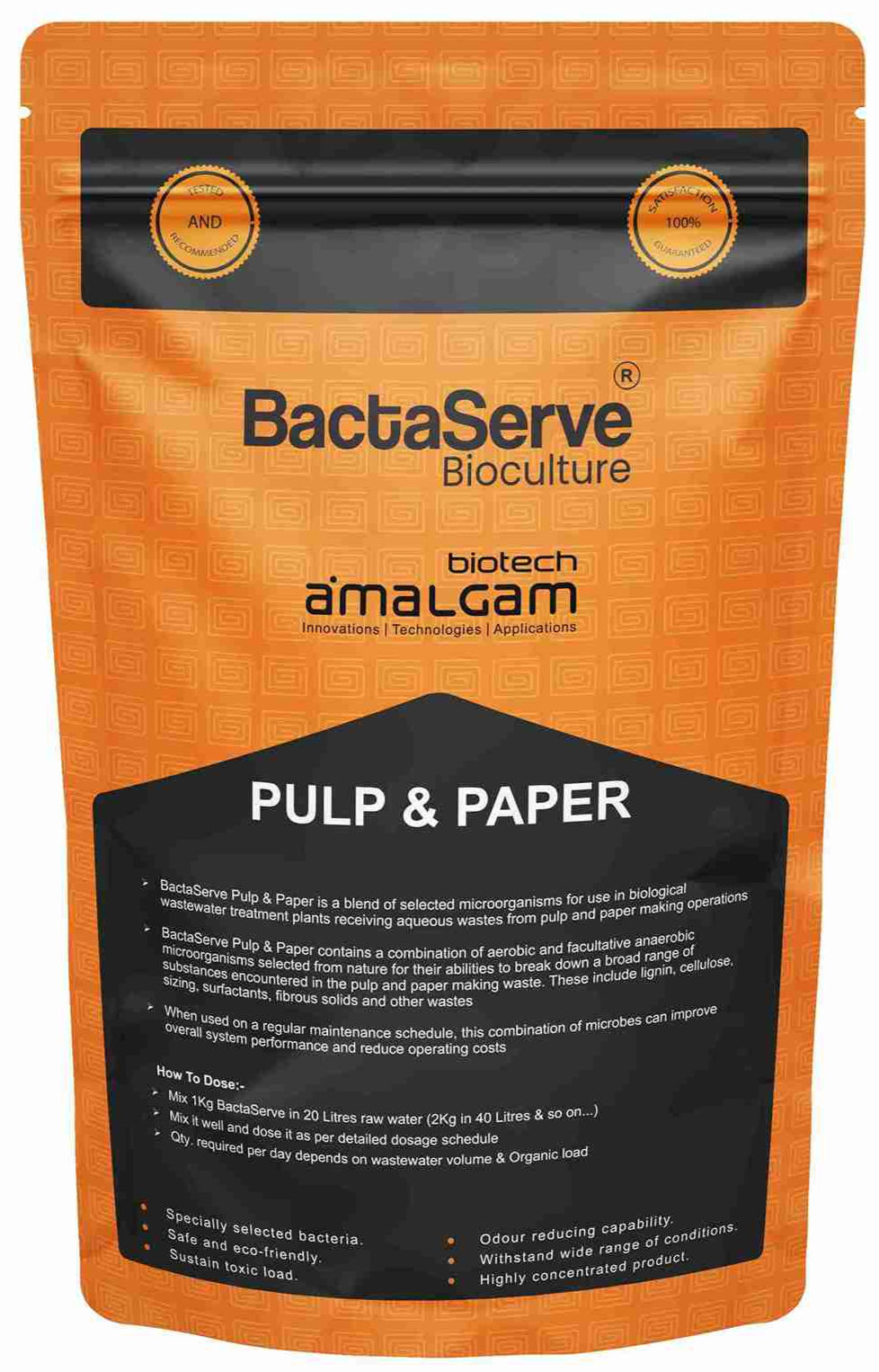
A 2,400 KLD recycling kraft paper mill ETP in Central India faced poor biological treatment performance at 42°C, along with low active MLSS caused by high TSS carryover. After implementing BactaServe Pulp & Paper, MLSS increased from 516 to 3,000 ppm within 30 days, while aeration-stage COD removal reached 95%, reducing COD from 13,000 to 700 mg/L.
Background & Technical Challenge
Plant Overview
A large recycling kraft paper manufacturing facility in Central India operates a 2,400 KLD ETP to treat the high-volume, organic-rich wastewater generated during paper production. The wastewater contains a substantial organic load, including complex compounds associated with paper recycling and manufacturing processes.
The ETP includes primary clarification followed by a large 4,680 m³ aeration tank, secondary clarification and tertiary filtration through Dual Media Filters (DMF) and downstream treatment. The plant's biological treatment performance was affected by elevated wastewater temperatures and high TSS carryover into the aeration system.
To restore biological treatment performance, the facility implemented BactaServe Pulp & Paper, supported by technical after-sales service for MLSS development and COD/BOD reduction.
The Technical Challenge & Risk
High Aeration Temperature: Wastewater temperatures reached 42°C, creating an unfavourable environment for conventional mesophilic bacteria and reducing their ability to effectively degrade COD and BOD.
High TSS Carryover: TSS entering the aeration tank from the primary clarifier remained in the range of 500 to 800 mg/L, increasing total MLSS without a proportional increase in active MLVSS.
Low Active Biomass: Despite the high solids loading, the aeration tank had only 516 ppm MLSS before BactaServe application, limiting the biological capacity available for organic matter degradation.
High Organic Load: The ETP received wastewater with an average inlet COD of approximately 13,000 mg/L, requiring sufficient active biomass to break down the complex organic compounds present in the paper mill effluent.
Poor COD/BOD Degradation: Thermal stress combined with inadequate active biomass impeded biological degradation, reducing the ETP's ability to consistently control COD and BOD concentrations.
MLSS Management Challenge: High TSS carryover required biomass management to maintain the desired MLSS/MLVSS balance while simultaneously developing sufficient active biomass in the aeration tank.
Treatment Process Flow Diagram

The recycling kraft paper mill ETP processes approximately 2,400 KLD of wastewater through primary clarification, biological treatment, secondary clarification and tertiary filtration. The process flow is designed to remove suspended solids and organic pollutants before final polishing of the treated effluent.
Process Flow
Raw Effluent → Holding Tank → Primary Clarifier → Aeration Tank → Secondary Clarifier → Clarified Tank → DMF Units → Treated Tank → Final Outlet
Primary sludge from the clarification stage is routed to the sludge sump and Belt Filter Press, while biological sludge is returned to the 4,680 m³ aeration tank to maintain the active biomass required for biological treatment.
Process Overview
Primary Clarification: Removes settleable solids and paper fibres from the incoming wastewater before biological treatment.
Aeration Treatment: The 4,680 m³ aeration tank provides the main biological treatment stage, where active microorganisms degrade complex organic compounds and reduce COD/BOD.
Secondary Clarification: Separates biological solids from treated wastewater, with a portion of biological sludge recirculated back to the aeration tank.
Sludge Handling: Primary sludge is collected in the sludge sump and transferred to the Belt Filter Press for dewatering.
Tertiary Polishing: Clarified wastewater passes through Dual Media Filter (DMF) units before reaching the treated water tank and final outlet.
Bio-Augmentation Strategy & Dosing
Why BactaServe™ Pulp & Paper Was Selected
To restore biological treatment performance under elevated temperature and high organic loading conditions, Amalgam Biotech implemented BactaServe Pulp & Paper, a specialised bioculture containing selected aerobic and facultative anaerobic microorganisms adapted for pulp and paper wastewater. The solution was selected to support active MLSS development and accelerate the degradation of complex compounds contributing to high COD and BOD.
Unlike conventional biological seed sludge, BactaServe Pulp & Paper combines microbial strains selected for their ability to degrade a broad range of substances found in pulp and paper wastewater, including lignin, cellulose, sizing compounds, surfactants, fibrous solids and other organic wastes. The product was supported by technical after-sales service to facilitate aeration tank commissioning, MLSS development and COD/BOD reduction.
Key Benefits
Development of active MLSS in the aeration tank
Improved MLVSS content for biological treatment
Degradation of complex pulp and paper organics
Breakdown of lignin, cellulose, sizing and surfactant compounds
Improved COD and BOD degradation
Biological performance under elevated wastewater temperatures
Improved MLSS settling and biomass stability
Supported aeration tank commissioning and process stabilisation
Biological Treatment Mechanism
BactaServe Pulp & Paper contains a combination of aerobic and facultative anaerobic microorganisms selected from nature for their ability to break down the diverse organic compounds present in pulp and paper wastewater. These microorganisms support the development of active biomass while degrading complex organic matter contributing to COD and BOD.
1. Active Biomass Development
Builds MLSS with a higher proportion of active biological biomass.
2. Complex Organic Breakdown
Degrades lignin, cellulose, sizing compounds and other paper-making organics.
3. Surfactant & Fibre Degradation
Breaks down surfactants, fibrous solids and other biodegradable wastes.
4. COD/BOD Reduction
Degrades organic pollutants and reduces COD/BOD concentrations.
30-Day Dosing Protocol (2400 KLD System)
Duration Sequence | Daily Dosage Rate | Cumulative Product Requirement |
Days 1 – 10 | 25 kg/day | 250 kg |
Days 11 – 20 | 15 kg/day | 150 kg |
Days 21 – 30 | 10 kg/day | 100 kg |
30-Day Campaign Total | — | 500 kg Total |
*Dosing Method: 1 kg BactaServe mixed in 20 Liters of fresh water (50 g/L) and aerated prior to dosing into the 4,680 m³ aeration basin.
*Dosing schedule is based on this plant case study and may vary depending on plant operating conditions and site-specific factors.
Performance Results & Analytics
Key Metrics Achieved
MLSS Development: Increased aeration tank MLSS from 516 ppm to 3,000 ppm within 30 days, supporting the development of healthy active biomass.
95% COD Removal: Reduced average COD from 13,000 mg/L to 700 mg/L, achieving 95% COD removal across the aeration tank.
High-Temperature Biological Treatment: Sustained biological treatment performance under an elevated aeration temperature of 42°C, where conventional mesophilic bacteria faced reduced effectiveness.
Improved MLSS Settling: Post-treatment observations showed good MLSS settling, healthy biomass and controlled outlet parameters, supporting consistent COD/BOD reduction.
Clear Treated Effluent: The resulting biological treatment produced clear outlet water without visible turbidity, before further polishing through downstream filtration.
Performance Results
Parameter | Before BactaServe Pulp & Paper | After BactaServe Pulp & Paper | Performance |
Aeration Tank MLSS | 516 ppm | 3,000 ppm | ~5.8× increase |
COD | 13,000 mg/L | 700 mg/L | 95% reduction |
Aeration Temperature | 42°C | 42°C | Biological treatment sustained |
MLSS Settling | Poor biological performance | Good settling | Improved biomass stability |
Treated Water Clarity | Turbidity concerns | Clear outlet water | No visible turbidity |


SV30 testing demonstrated good MLSS settling following BactaServe Pulp & Paper application, supporting stable biological treatment and consistent COD/BOD reduction.
Client Feedback: High-Temperature MLSS Development & COD Removal
“Our recycling kraft paper ETP was struggling with high wastewater temperatures of 42°C and low active MLSS, which affected biological COD/BOD degradation. After introducing BactaServe Pulp & Paper, MLSS increased from 516 ppm to 3,000 ppm within 30 days, while COD reduced from 13,000 mg/L to 700 mg/L, achieving 95% COD removal. The aeration tank also achieved good MLSS settling and stable biological performance.”
Plant Head ETP Operations
Recycling Kraft Paper Manufacturing Plant, Central, India
⭐⭐⭐⭐⭐
Facing Thermal Stress or Low MLSS Issues at Your Paper Mill?
Let our pulp and paper wastewater specialists analyze your aeration temperature, TSS carryover, and COD loading to design a custom BactaServe - Pulp and Paper bio-augmentation campaign.
Step 1: Share your process details and treatment objectives.
Step 2: Our engineers assess your system and operating conditions.
Step 3: Receive a tailored solution and implementation plan.
Frequently Asked Questions
Q1: How did BactaServe Pulp & Paper achieve 95% COD removal at 42°C in a 2,400 KLD paper mill ETP?
BactaServe Pulp & Paper introduced thermotolerant aerobic and facultative anaerobic bacterial strains capable of thriving at 42°C. In a 4,680 m³ aeration basin, it broke down complex lignin, cellulose, and sizing agents, reducing inlet COD from 13,000 mg/L to 700 mg/L within 30 days.
Performance Highlights:
Target Waste Stream: High-volume, organic-rich recycled kraft paper mill wastewater containing residual fibres, starch, and synthetic surfactants.
Biomass Growth: Increased active Mixed Liquor Suspended Solids (MLSS) from a weak baseline of 516 ppm to 3,000 ppm.
Thermal Resilience: Maintained biological degradation at elevated 42°C temperatures, where conventional mesophilic seed sludge can lose activity.
Q2: Why do conventional biological seed sludges fail in high-temperature pulp and paper ETPs?
Most standard cow dung or municipal seed sludges contain mesophilic bacteria that experience thermal stress at temperatures above 38°C. At 42°C, their biological activity can decline, leading to poor MLSS settling, lower active MLVSS levels, and continued COD/BOD carryover.
Engineering Comparison:
Standard Seed Sludge: Can lose activity above 38°C, with a higher risk of filamentous bulking and slow adaptation to recalcitrant lignin.
BactaServe Pulp & Paper: Uses thermotolerant strains designed for high-temperature stability and capable of degrading complex wood fibres, sizing compounds, and surfactants.
Q3: How does high primary TSS carryover impair active biomass (MLVSS) development in paper mill aeration basins?
Primary clarifier TSS carryover of 500 to 800 mg/L can contain inert inorganic fillers, clay, and non-biodegradable paper fibres. These suspended solids increase total MLSS without increasing active microbial mass (MLVSS), which can hide poor biological performance and reduce the effective biological activity in the aeration basin.
Process Solution:
Active Biomass Regeneration: BactaServe supports the development of the active biological fraction (MLVSS) within the sludge matrix.
Enhanced SV30 Settling: Improves biological sludge floc formation, supporting better separation of clear supernatant in secondary clarifiers.
Q4: What was the 30-day bio-augmentation dosing protocol for the 2,400 KLD paper mill ETP?
The 30-day bio-augmentation programme used a total of 500 kg of BactaServe Pulp & Paper. Dosing was 25 kg/day during Days 1 to 10, 15 kg/day during Days 11 to 20, and 10 kg/day during Days 21 to 30, added directly to the 4,680 m³ aeration tank after pre-aeration rehydration.
Rehydration & Dosing Method:
Slurry Preparation: Mix 1 kg of product with 20 litres of fresh water (50 g/L) and aerate briefly before dosing into the basin.
Dosing Sequence:
Days 1 to 10 (Commissioning): 25 kg/day, or 250 kg total, to rapidly build active biomass and compete with inert TSS.
Days 11 to 20 (Stabilisation): 15 kg/day, or 150 kg total, to develop dense biological flocs.
Days 21 to 30 (Maintenance): 10 kg/day, or 100 kg total, to maintain approximately 3,000 ppm steady-state active MLSS.
Q5: What specific stubborn paper manufacturing compounds can BactaServe Pulp & Paper degrade?
BactaServe Pulp & Paper produces targeted cellulase, xylanase, and lignin-degrading enzymes that help break down Lignin, Cellulose fibers, Rosin/Alum sizing agents, De-inking surfactants, Starches, and Synthetic wet-strength resins found in recycled kraft paper effluent.
Biological Enzymatic Breakdown:
Lignin & Cellulose: Complex plant polymers are broken down into simpler organic compounds for further microbial digestion.
Surfactants & Foaming Agents: Helps degrade surface-active chemicals that can contribute to aeration basin foaming and reduced oxygen transfer.
Q6: What process flow diagram sequence was used to treat and polish this 2,400 KLD paper mill effluent?
The treatment process routes raw wastewater through a Holding Tank, Primary Clarifier, 4,680 m³ Aeration Tank, Secondary Clarifier, Clarified Water Tank, Dual Media Filters (DMF), and finally a Treated Water Storage Tank for discharge or reuse.
Sludge Recirculation: Biological sludge from the secondary clarifier is continuously returned to the aeration basin through RAS to maintain the target MLSS, while primary clarifier sludge is dewatered using a Belt Filter Press.

Written by Ashutosh Vadanagekar
Technical Director, Amalgam Biotech
Ashutosh Vadanagekar has over 22 years of experience in water and wastewater treatment, with expertise in process design and bioculture technology. He develops and implements eco-friendly biological treatment solutions for ETPs and STPs across industries, addressing challenges such as high COD and BOD, ammonia, FOG, odour and biological process instability. He also contributes technical expertise and practical insights to Amalgam Biotech’s wastewater treatment case studies. Connect on LinkedIn