.webp)
Don't Let Oil and Grease Ruin Your Wastewater: Effective Removal Techniques
Updated: Sep 16

Introduction: The Unseen Threat in Our Water
Oil and grease in wastewater may not always be visible, but their impact on treatment systems, pipelines, and the environment is significant. From household kitchens to large industrial facilities, fats, oils, and grease (FOG) enter wastewater streams daily, creating operational and environmental challenges. When left untreated, oil and grease can clog pipelines, reduce treatment efficiency, and increase compliance risks.
This article explains why oil and grease contamination matters, the major sources involved, and the most effective removal techniques used in modern wastewater treatment systems.

Common Sources of Oil and Grease in Wastewater
Source | Type of Oil & Grease | Typical Impact |
Domestic kitchens | Fats & cooking oils | Pipe blockages, sewer backups |
Restaurants & hotels | FOG | Grease trap overload, odour issues |
Food processing units | Animal & vegetable oils | Reduced biological efficiency |
Manufacturing industries | Lubricants, cutting oils | Treatment process disruption |
Automotive & workshops | Petroleum hydrocarbons | Toxicity to microbes |
Why Oil and Grease Contamination Matters
Studies indicate that oil and grease can account for up to 30–40% of sewer blockages in urban wastewater networks, leading to increased maintenance costs and emergency overflows.
Water, the medicine of life, is a precious resource often taken for granted. Yet, waiting beneath its shimmering surface lies an insidious threat: oil and grease contamination. These contaminants, often invisible to the naked eye, pose a significant challenge to our water systems and the environment. Oil and grease delay the natural purification processes in our waterways, disrupting the delicate balance of aquatic ecosystems. They can clutter aquatic life, deplete oxygen levels, and hinder the penetration of sunlight, essential for the survival of aquatic flora. This disruption can lead to algal blooms, fish kills, and the degradation of water quality, impacting both human and animal health.
Sources of Oil and Grease Pollution: From Kitchen Sinks to Industrial Plants
The sources of oil and grease pollution are various and inescapable. In our homes, everyday activities like cooking and dishwashing contribute to the problem. Fats, oils, and grease (FOG) from food preparation are washed down drains, accumulating in sewer systems. Restaurants and hotels, with their high volume of food preparation, are significant contributors, which is why FOG management in hotel wastewater systems is critical for operational stability. Industrial processes, from manufacturing to energy production, also release substantial amounts of oil and grease into the wastewater stream. Machine lubrication, metal processing, dairy industry, and textile manufacturing, all generate oily wastewater. Even seemingly innocuous activities like car washing can introduce petroleum-based oils and hydrocarbons into our water systems.
The Dire Consequences: Environmental Damage and Infrastructure Mayhem
Wastewater treatment plants exposed to high FOG loads often experience 15–25% reduction in biological treatment efficiency, increasing energy and chemical consumption.
The consequences of oil and grease contamination are comprehensive and devastating. Beyond the immediate environmental impact, these contaminants can cause destruction on our infrastructure. They clog pipes, reducing flow capacity and leading to sewer backups and overflows. These backups can release untreated sewage into homes, businesses, and the environment, posing serious health risks and causing significant property damage. In wastewater treatment plants, oil and grease hinder treatment processes, reducing efficiency and increasing operational costs. Effective oil and grease removal from wastewater is crucial to mitigate these issues and protect our environment and infrastructure.
Understanding the Enemy: Types of Oil and Grease
Fats, Oils, and Grease: FOG - The Usual Suspects
The term "oil and grease" encompasses a broad spectrum of substances. The most common culprits are fats, oils, and grease (FOG), typically originating from animal and vegetable sources. These are the byproducts of our culinary endeavors, the remnants of that delicious meal that can cause significant problems if not disposed of properly. FOG tends to solidify at room temperature, contributing to blockages in pipes and sewer lines.
Petroleum-Based Oils and Hydrocarbons: A Different Beast
Another category of oil and grease contaminants comprises petroleum-based oils and hydrocarbons. These originate from industrial processes, vehicle maintenance, and accidental spills. They are often more challenging to remove due to their complex chemical composition and persistence in the environment. These substances can be toxic to aquatic life and can persist in the environment for long periods, causing long-term damage. Efficient oil and grease removal from wastewater is essential in addressing this challenge and protecting our delicate ecosystems.
Effective Removal Techniques: Keeping Your Water Clean
Gravity Separation: Letting Nature Do the Work
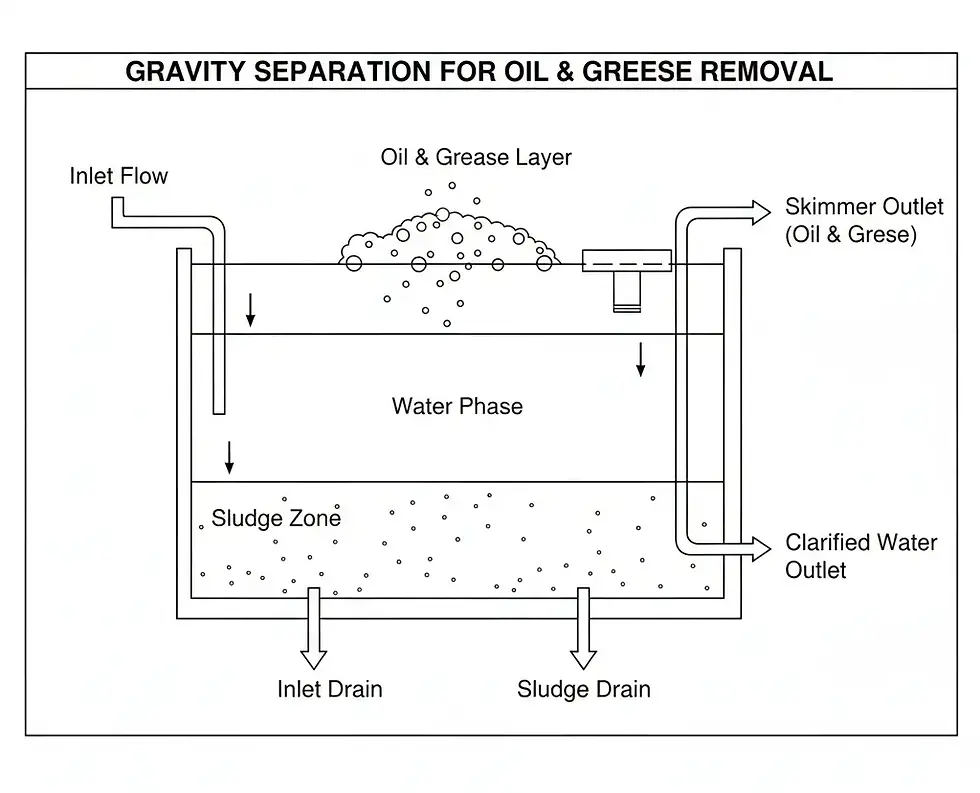
One of the simplest and most cost-effective methods for oil and grease removal from wastewater is gravity separation. This technique relies on the natural flexibility of oil and grease, allowing them to rise to the surface of the wastewater, where they can be skimmed off. Gravity separation is often used as a preliminary treatment step in wastewater treatment plants and industrial facilities, removing a significant portion of the oil and grease before more advanced techniques are employed. This method is particularly effective for free-floating oils and grease with a lower viscosity.
Dissolved Air Flotation (DAF): Tiny Bubbles, Big Impact
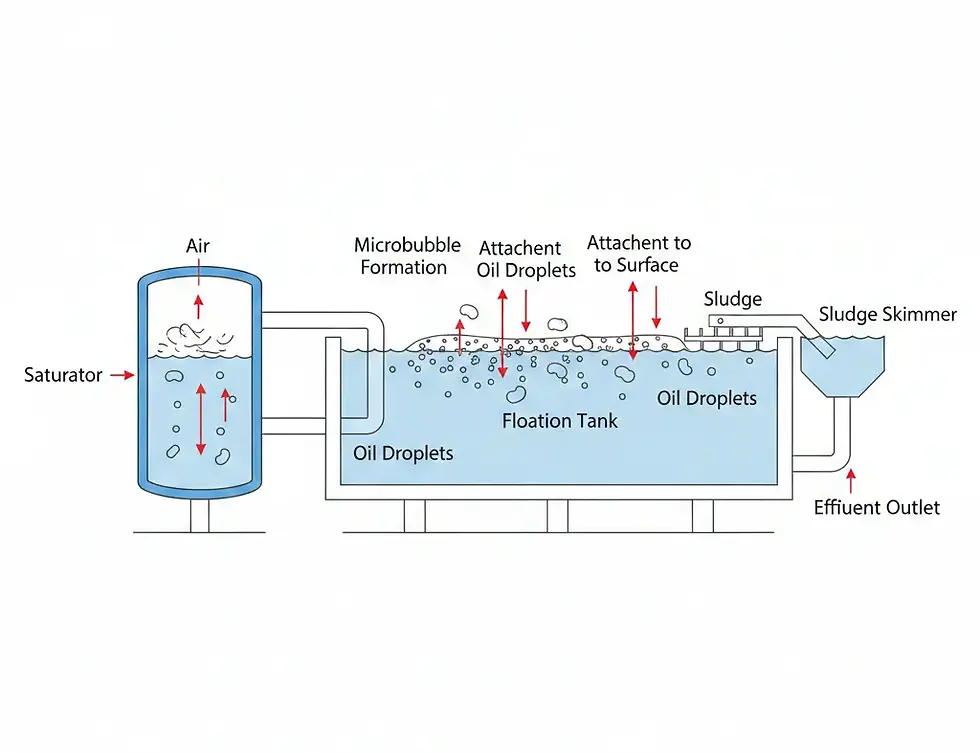
Dissolved Air Flotation (DAF) is a more sophisticated technique that introduces tiny air bubbles into the wastewater. These bubbles attach to the oil and grease droplets, increasing their buoyancy and causing them to float to the surface, where they are collected and removed. DAF is particularly effective in removing dispersed oil and grease that may not readily separate by gravity. This method enhances the efficiency of oil and grease removal from wastewater, especially for emulsified oils and those with smaller droplet sizes. DAF systems are commonly used in various industries, including food processing, petroleum refining, and pulp and paper manufacturing.
Coagulation and Flocculation: Teamwork Makes the Dream Work
Coagulation and flocculation work in cycle to remove suspended oil and grease particles. Coagulation involves adding chemicals, known as coagulants, to the wastewater to neutralize the electrical charges of the particles, causing them to clump together. Flocculation then introduces larger particles, or flocs, that further bind the oil and grease, facilitating their removal by sedimentation or filtration. These processes are vital for effective oil and grease removal from wastewater, especially for finely dispersed oil and grease that cannot be removed by gravity separation or DAF alone.
Filtration: The Final Line of Defence
Filtration acts as a final polishing step in wastewater treatment, removing any remaining suspended solids and oil and grease that may have escaped previous treatment processes. Various types of filters, from sand filters to membrane filters, can be employed depending on the specific requirements of the wastewater treatment system. This ensures comprehensive oil and grease removal from wastewater, producing a high-quality effluent that meets stringent discharge standards. Filtration is crucial for protecting the environment and ensuring the safety of water resources.
Biological Treatment: Nature's Cleanup Crew

Biological treatment harnesses the power of microorganisms to break down organic matter, including oil and grease , using bioculture-based wastewater treatment processes. These microorganisms consume the contaminants, converting them into harmless byproducts like carbon dioxide and water. Biological treatment is a sustainable and environmentally friendly approach to oil and grease removal from wastewater. It is commonly used in municipal wastewater treatment plants and is also gaining popularity in industrial settings.
This approach is widely adopted in municipal and industrial systems that rely on aerobic bioculture for wastewater purification.
Advanced Technologies for Tougher Challenges

Membrane Bioreactors (MBRs): Combining Forces for Superior Results
Membrane bioreactors (MBRs) combine the benefits of biological treatment with membrane filtration. This hybrid technology achieves a high degree of treatment efficiency, removing even the most recalcitrant pollutants. MBRs are particularly well-suited for treating industrial wastewater with high concentrations of oil and grease, offering a robust solution for oil and grease removal from wastewater. They produce a high-quality effluent that can be reused or safely discharged into the environment.
In high-strength wastewater scenarios, MBRs are often combined with bioremediation-based FOG treatment strategies to improve overall system performance.
Adsorption: Trapping the Troublemakers
Adsorption utilizes materials with a high surface area to bind and remove oil and grease from wastewater. Activated carbon, a common adsorbent, effectively traps these contaminants, preventing them from re-entering the environment. Adsorption is a versatile technique that can be used in various treatment scenarios for efficient oil and grease removal from wastewater. It is particularly effective for removing dissolved organic compounds and trace contaminants.
Oil Skimmers: A Surface-Level Solution
Oil skimmers are mechanical devices that remove oil and grease from the surface of wastewater. They employ various mechanisms, such as belts, drums, or ropes, to collect the floating contaminants. Oil skimmers are particularly useful in situations where a significant amount of free-floating oil and grease is present. This provides a targeted approach to oil and grease removal from wastewater and can be used as a pre-treatment step or in conjunction with other treatment methods.
Biological Solutions for Sustainable Oil and Grease Control

Biological treatment is increasingly preferred for long-term oil and grease control due to its sustainability and operational simplicity. At Amalgam Biotech, bacterial bioculture solutions are designed to support the natural breakdown of fats, oils, and grease, as demonstrated in real-world wastewater treatment performance improvements. Products such as BactaServe FOG SR Bar help reduce FOG accumulation, improve biological performance, and minimise system blockages without introducing harsh chemicals.
A hotel STP case study demonstrates the practical impact of this approach, achieving more than 91% reduction in oil and grease while restoring stable biological treatment performance.
For grease traps and kitchen drainage systems that require regular biological treatment, BactaServe FOG Powder provides a microbial approach to breaking down accumulated fats, oils and grease.
These solutions are suitable for STPs, ETPs, hotels, and food-processing facilities seeking stable and eco-friendly wastewater management.
Looking to Control Oil and Grease in Your Wastewater System?
Persistent FOG buildup can reduce treatment efficiency, increase maintenance costs, and lead to compliance issues. If your STP or ETP is struggling with oil and grease, our bioculture-based solutions can help restore system balance naturally.
Connect with our wastewater specialists to evaluate your system and identify the right biological solution for long-term oil and grease control.
Struggling with Oil and Grease in Your Wastewater?
Reduce FOG buildup, improve treatment performance and minimise maintenance issues with the right biological solution for your STP or ETP. Speak with Amalgam Biotech to find the right approach for your wastewater system.
Frequently Asked Questions
What is oil and grease in wastewater?
Oil and grease in wastewater refer to fats, oils, hydrocarbons, and lubricants that enter water streams from kitchens, restaurants, industries, and mechanical processes. These substances do not dissolve easily in water and can accumulate in pipes, treatment units, and biological systems if not properly managed.
Why is oil and grease removal important in wastewater treatment?
Oil and grease can clog pipelines, reduce oxygen transfer, and interfere with biological treatment processes. If left untreated, they increase maintenance costs, cause system failures, and may lead to regulatory non-compliance. Effective removal helps maintain treatment efficiency and protects the environment.
How to remove oil and grease from wastewater effectively?
Oil and grease can be removed using methods such as gravity separation, dissolved air flotation (DAF), coagulation–flocculation, filtration, and biological treatment. In many systems, a combination of physical separation and bioculture-based treatment provides long-term and sustainable control.
What is an oil and grease remover in wastewater systems?
An oil and grease remover is a treatment solution or system designed to separate or degrade fats, oils, and grease from wastewater. This may include mechanical devices like oil skimmers, chemical processes, or biological solutions that use microorganisms to break down grease naturally.
How to determine oil and grease in wastewater?
Oil and grease in wastewater are determined by collecting representative samples and analyzing them using standardized laboratory methods. These tests help identify the concentration of oil and grease present and assess whether treatment systems are performing effectively.
How to measure oil and grease in wastewater accurately?
Oil and grease in wastewater are commonly measured using solvent extraction and gravimetric methods, such as those outlined in standard wastewater testing protocols. The results are typically expressed in milligrams per liter (mg/L) and used for compliance monitoring and process optimization.
What are the main sources of oil and grease in wastewater?
Major sources include domestic kitchens, restaurants, hotels, food processing units, automotive workshops, and manufacturing industries. Industrial activities involving lubrication, metal processing, or petroleum products contribute significantly to oil and grease loads in wastewater.
Can biological treatment help reduce oil and grease in wastewater?
Yes, biological treatment uses specialized microorganisms that consume fats, oils, and grease as a food source. This approach supports continuous degradation, reduces grease buildup, and improves overall system stability without the use of harsh chemicals.
What problems can high oil and grease levels cause in treatment plants?
High oil and grease levels can reduce biological activity, cause foaming, block aeration systems, and lower treatment efficiency. Over time, this leads to frequent maintenance issues, odour problems, and increased operational costs.
Is oil and grease removal required for regulatory compliance?
In most regions, wastewater discharge regulations specify permissible oil and grease limits. Exceeding these limits can result in penalties, operational restrictions, or environmental harm, making proper oil and grease management a critical compliance requirement.


